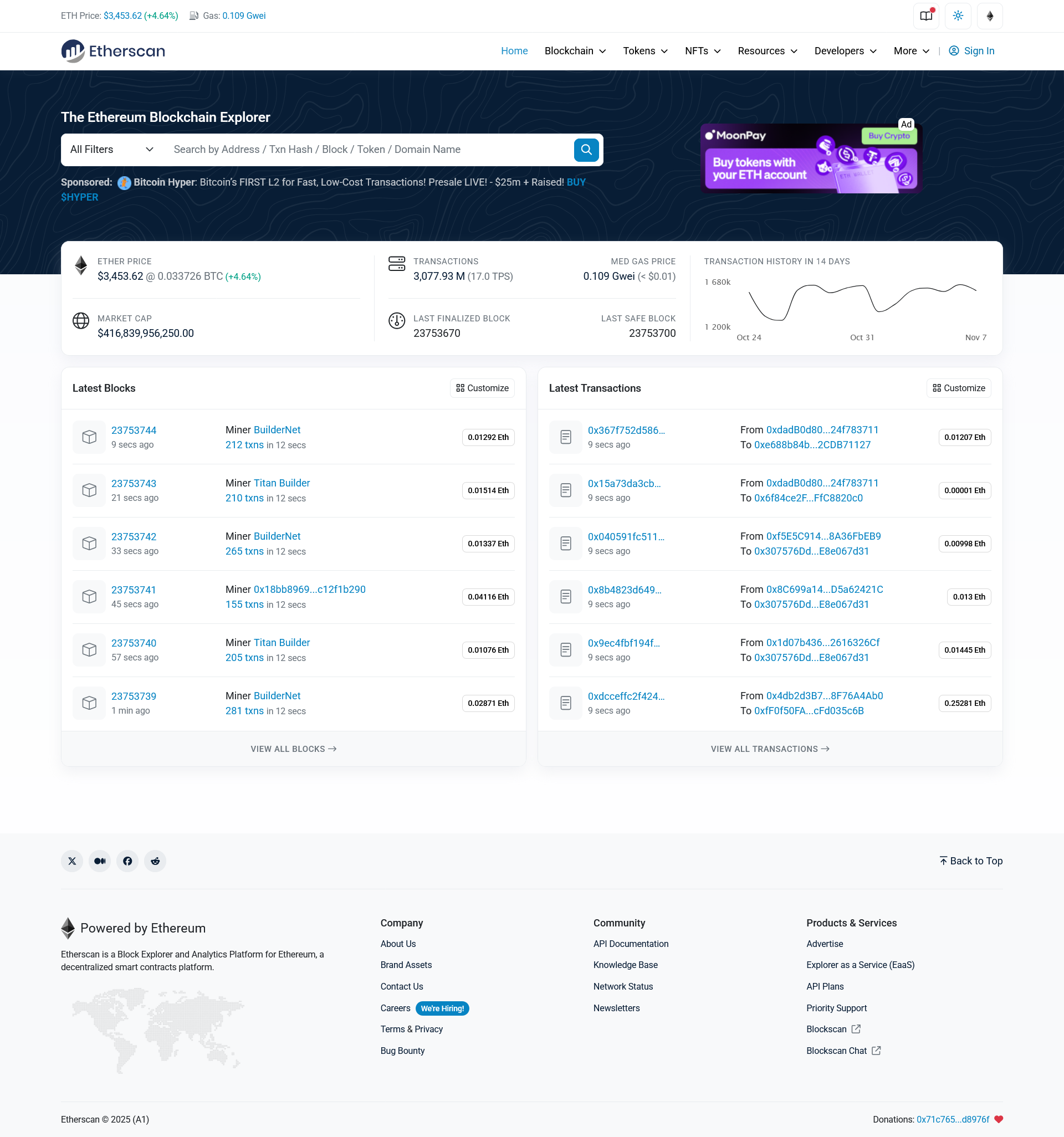
Etherscan: The Blockchain Explorer for Ethereum
In the world of cryptocurrency, transparency is key. As the Ethereum network continues to grow, tracking and verifying transactions, smart contracts, and wallets becomes increasingly important. Etherscan is one of the most popular and powerful tools to help users access this vital information. But what exactly is Etherscan, and how does it work? Let’s break it down.
What is Etherscan?
Etherscan is a block explorer and analytics platform for the Ethereum blockchain. It allows users to view detailed information about every transaction, address, smart contract, and more on the Ethereum network. Think of it as a search engine for the Ethereum blockchain that makes it easier to track everything that happens on the network.
Since Ethereum is a decentralized blockchain, there’s no central authority controlling it. This means that every transaction is open for anyone to see and verify. Etherscan takes that data and presents it in a clean, user-friendly format, making it accessible to both beginners and advanced users.
Key Features of Etherscan
1. Transaction Tracking
. Etherscan allows you to track any Ethereum transaction. By simply entering the transaction ID (hash), you can view the status, amount transferred, sender and receiver addresses, and even the transaction fee. This is essential for verifying that transactions have been completed successfully and transparently.
2. Wallet Address Lookup
. If you want to see the details of a specific Ethereum wallet, Etherscan lets you do that too. By entering a wallet address, you can find the balance of ETH and tokens associated with that wallet, as well as a full transaction history. This feature is useful for both personal tracking and for auditing others’ activities.
3. Smart Contract Verification
. Smart contracts are self-executing contracts where the terms of the agreement are directly written into code. Etherscan allows you to view the code of deployed smart contracts on the Ethereum blockchain. This helps developers and users ensure the authenticity and security of smart contracts before interacting with them.
4. Gas Tracker
. Gas fees on Ethereum can fluctuate based on network activity. The Gas Tracker feature on Etherscan helps users stay updated on current gas prices. You can see the average gas prices for different types of transactions (e.g., transfers, contract interactions) and decide the best time to send your transaction for the lowest fee.
5. ERC-20 Token Tracker
. Etherscan also provides detailed information about ERC-20 tokens, the most popular type of token on the Ethereum network. You can search for a specific ERC-20 token by name or symbol and track its trading volume, market cap, holders, and more. This is an essential feature for anyone dealing with altcoins or tokenized assets.
6. Event Logs and Analytics
. For developers, Etherscan offers detailed event logs and analytics. You can inspect transactions, gas usage, smart contract events, and much more. This helps developers debug issues, analyze gas consumption, and improve the efficiency of their code.
7. API Access
. Etherscan also offers an API, allowing developers to programmatically access data from the Ethereum blockchain. This is useful for building applications or tools that interact with Ethereum in real-time.
Why is Etherscan Important?
1. Transparency
One of the key benefits of using Etherscan is the transparency it provides. All Ethereum transactions are public, but without an easy way to view and understand them, the data can be overwhelming. Etherscan makes the blockchain accessible by offering a clean and organized interface for users to explore.
2. Trust
In the world of cryptocurrency, trust is essential. Etherscan helps build that trust by offering a transparent, verifiable record of transactions. Whether you're sending Ethereum, interacting with a smart contract, or checking the balance of a wallet, Etherscan provides the evidence you need to be confident in your interactions.
3. Security
Etherscan helps users ensure they are interacting with trusted addresses and contracts. By inspecting transactions and contracts before interacting with them, you can avoid scams and malicious actors. The ability to verify contract code and see detailed transaction history adds an extra layer of security to the Ethereum ecosystem.
How to Use Etherscan
1. Search for a Transaction or Address
On the homepage of Etherscan (https://etherscan.io/), you’ll see a search bar. You can enter a transaction hash, wallet address, or contract address to look up detailed information.
2. View Transaction Details
Once you’ve entered the transaction or address, you’ll see a page that shows details such as the transaction status (whether it's confirmed or pending), the amount of ETH transferred, the addresses involved, and the block number.
3. Track Gas Fees
If you’re planning to send Ethereum or interact with a contract, you can check the current gas prices using the “Gas Tracker” tool. This will give you a sense of how much you’ll need to pay for a transaction at that moment.
4. Explore Token Information
You can also search for specific ERC-20 tokens on Etherscan. Just enter the token's name or symbol, and you’ll be taken to a page that shows data like the token’s total supply, number of holders, and its transaction history.
5. Smart Contract Interaction
For developers, Etherscan provides the ability to view and interact with smart contracts directly on the platform. You can read contract code, verify its source, and even execute functions directly from the Etherscan interface.
Conclusion
Etherscan is an invaluable tool for anyone involved in the Ethereum ecosystem. Whether you're a developer, investor, or just a curious user, it provides transparency, security, and accessibility to the Ethereum blockchain. By offering detailed insights into transactions, wallet addresses, smart contracts, and more, Etherscan helps make the complex world of blockchain more understandable and trustworthy.
As the Ethereum network continues to expand, tools like Etherscan will become even more crucial for navigating and interacting with decentralized applications, digital assets, and the broader blockchain world.